
Law Journals
Prison Rules and Social Media: Legal Issues in Russell Brand’s YouTube Statement
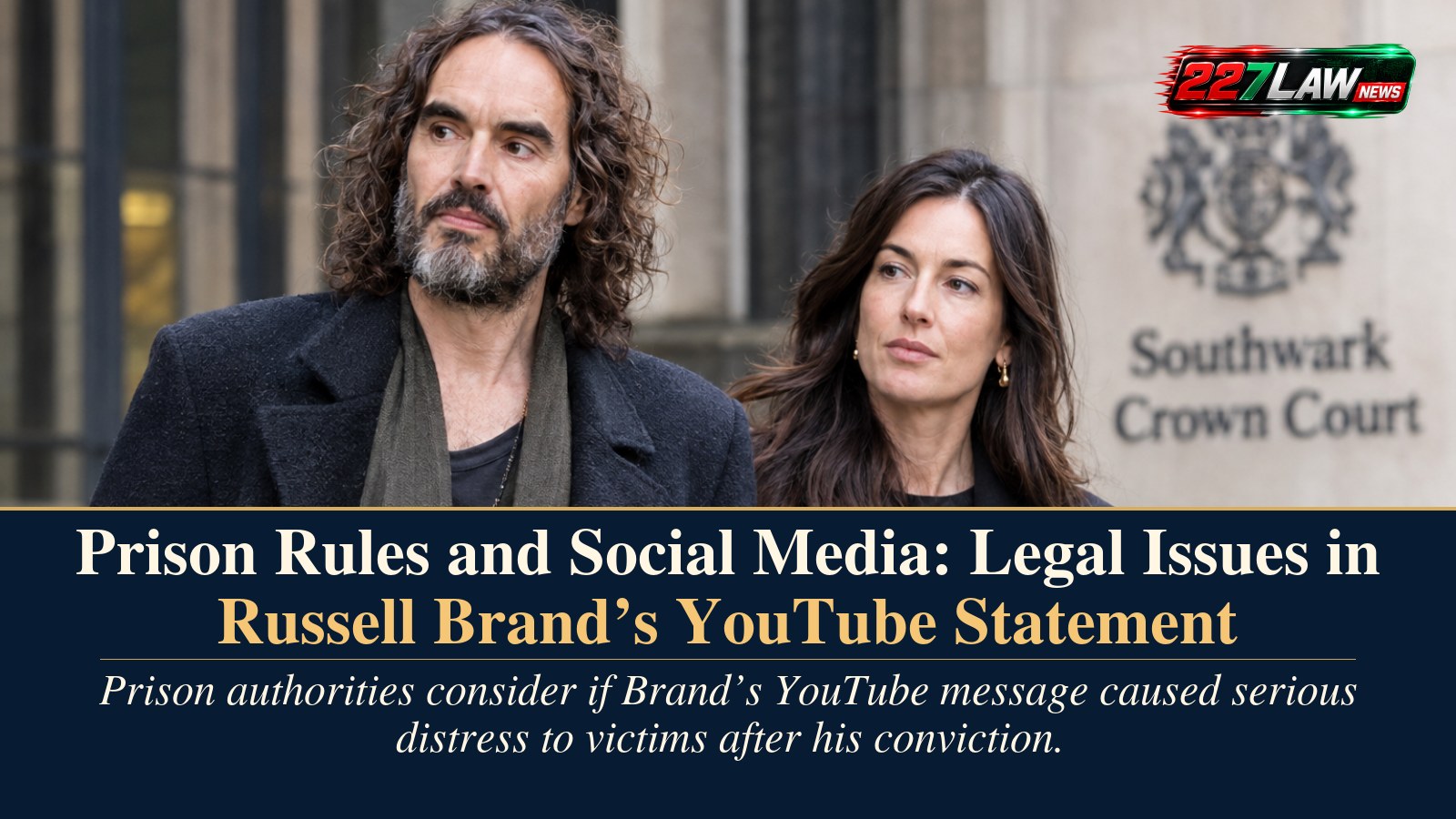
The Ministry of Justice examines whether Russell Brand’s YouTube message, issued via his wife, breaches prison rules designed to protect victims from serious distress, amid calls for content removal.
The Ministry of Justice is conducting an inquiry into whether Russell Brand, currently serving a prison sentence for rape and sexual assault, has breached prison rules by issuing a statement through his wife on YouTube protesting his innocence. The inquiry focuses on whether the statement has caused or is likely to cause "serious distress" to the victims, in line with official guidance on prisoner media access.
Prison Rules on Media Access and Victim Protection
Under the Prison Service instructions, a governor must authorise any prisoner’s communication with the media. The key consideration is whether the broadcast or publication is likely to cause serious distress to victims or outrage to public sensibilities, especially if the prisoner’s crimes are recent, notorious, or horrific. Correspondence that is likely to be published or broadcast must not contain material about the prisoner’s own crimes or those of others, except where it involves serious representations about conviction or sentence.
The inquiry is weighing these rules against Brand’s right to protest his innocence, while also considering the notoriety of the crimes and the time elapsed since the conviction. Brand was convicted at Southwark Crown Court on 5 November and is serving a 10-and-a-half-year sentence.
Government and Social Media Response
Following public and political pressure, including calls from Andy Burnham for Google to remove the video, the government has engaged in dialogue with YouTube’s parent company. However, there is no statutory power to compel removal. The Prime Minister has urged social media platforms to take down the content, emphasising that victims deserve peace and should not have to hear from the offender.
YouTube has previously suspended Brand’s channel from monetisation and is investigating the new content. Meanwhile, Conservative politicians have expressed caution about immediate demands for removal without clear legal breaches, suggesting that any legislative changes should be carefully considered.
Implications for Prisoners’ Rights and Victims’ Protection
- The case highlights the tension between prisoners' rights to communicate and protest innocence, and the need to protect victims from further harm.
- It raises questions about the adequacy of current prison rules and social media regulation in managing such communications.
- The government’s limited powers over private platforms underline challenges in enforcing content removal.
This situation underscores ongoing debates about the intersection of criminal justice, victim rights, and digital media governance.
For more detailed legal analysis and updates on legislation and policy in this area, visit https://227law.com.
Disclaimer: This article provides general information about legal developments and does not constitute legal advice.