
Legal Commentary
Russell Brand and the Timing of Public Outrage: Justice or Influence?
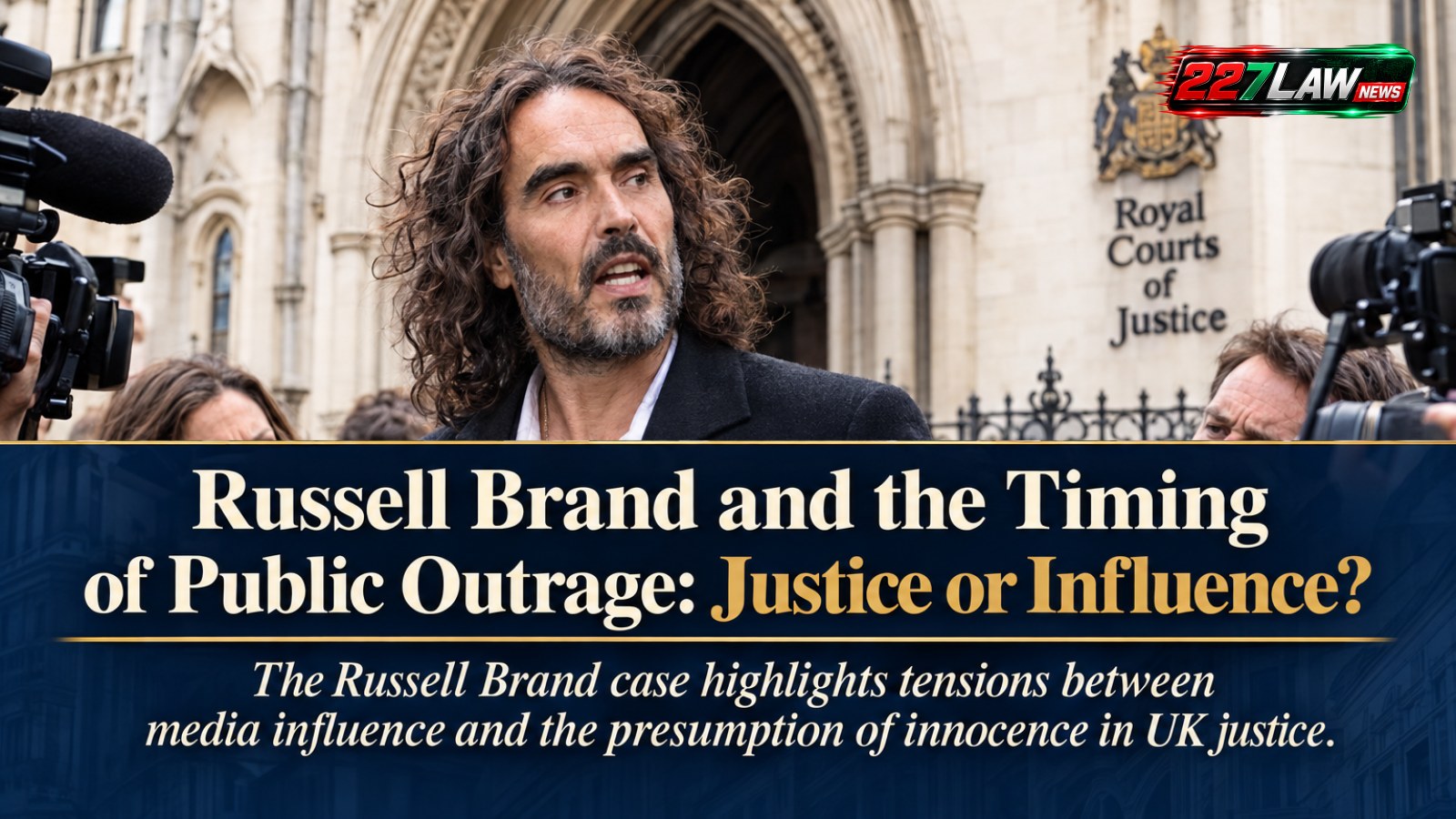
The public unravelling of Russell Brand highlights concerns about media influence, the presumption of innocence, and institutional priorities in high-profile allegations.
In recent months, the case surrounding Russell Brand has sparked intense public debate about the role of media, government, and institutional influence in shaping narratives around serious allegations. Brand, once known primarily as a comedian, has become a vocal critic of powerful UK institutions including the government, mainstream media, and the pharmaceutical industry. His outspoken views have often placed him at odds with establishment figures, raising questions about the timing and nature of the allegations made against him.
Media Influence and the Presumption of Innocence
The rapid and forceful media coverage of the allegations against Brand has been described by some observers as a form of "punishment by headline." Before any formal legal proceedings could unfold, Brand's reputation was subjected to intense public scrutiny, arguably undermining the presumption of innocence that is a cornerstone of UK justice. This phenomenon is not unique to Brand’s case but reflects a broader trend where public opinion is shaped by media narratives prior to judicial determination.
Institutional Priorities and Consistency
One of the more challenging questions raised by this case is whether similar allegations against other public figures receive comparable media and institutional treatment. The consistency of investigative and prosecutorial standards is essential to maintaining public confidence in justice. However, the disparity in coverage and response may suggest that factors beyond the merits of the case—such as institutional convenience or political considerations—play a role in how cases are presented and pursued.
- Are allegations against critics of the establishment treated differently?
- Does media coverage reflect editorial bias or institutional influence?
- How does public pressure shape prosecutorial decisions?
These questions underscore the need for transparency and impartiality in both media reporting and legal processes.
The Role of Public Discourse and Legal Process
While public discussion and scrutiny are vital in a democratic society, they must be balanced against the rights of individuals to a fair and independent legal process. The rush to judgment in the court of public opinion risks compromising the integrity of justice and may influence outcomes before formal procedures have taken place. It is equally important to resist assumptions of guilt or innocence based on an individual’s political stance or public persona.
As this situation continues to unfold, it serves as a reminder that allegations of serious misconduct demand thorough investigation and measured reporting. The principles of fairness and due process should guide both the media and legal authorities.
For further insights into the intersection of media influence, legal standards, and institutional accountability, readers may find detailed legal analysis and commentary at https://227law.com.
Disclaimer: This article provides general information about legal and media issues related to public allegations and does not constitute legal advice. For specific legal guidance, consult a qualified legal professional.