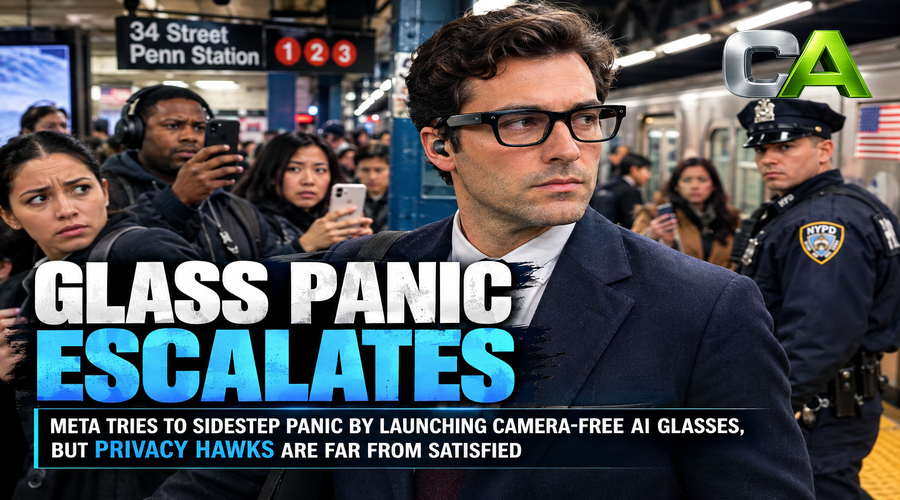
Moments before Meta’s annual Connect conference next week, the social giant finds itself racing to reinvent the wheel it helped set spinning—this time by removing the spokes. With the Luna smart glasses, reportedly designed to forgo photographic ambitions in favour of six microphones and a voice assistant button, Meta is hoping that the absence of a camera will cool the privacy panic that’s gone from niche paranoia to mainstream anxiety faster than you can say 'ZuckOff.'
THE PETARD AND ITS HOIST
While previous iterations of Meta’s eyewear, like their Ray-Ban and Oakley collaborations, let owners covertly livestream everything from chance encounters to cashier banter, sales soared, so did dismissals, restrictions, and spoofed ads. Society, it seems, has discovered that being perpetually filmed by someone in plastic tortoiseshells can spoil the charm of public life.
For those desperate to preserve shreds of personal dignity, the catchiest new app is not a virtual pet or a meme generator—it’s ZuckOff, an ‘AI glasses detector’ with more than 6,000 downloads by mid-September and a name that needs no further comment.
Luna’s reported ‘innovation’ is to leave the camera out entirely. Instead, users may summon Meta’s AI assistant via a dedicated button, while six built-in microphones quietly chart the ambient noise for future synthetic productivity. Presenting two alleged styles, Clubmaster and Burbank, Meta’s wager is simple: If you can’t snag that slice-of-life TikTok, perhaps you’ll settle for AI-powered micro-nudges and the comfort of knowing your glasses aren’t actively recording your barista’s existential breakdown.
ZuckOff and its rivals, meanwhile, provide a public service for those still imagining the world as a stage unmonitored by Bluetooth. The Polish-created app can spot, with moderate confidence, the digital fingerprints of nearby glasses—though not, crucially, whether they’re actually filming or exactly who’s wearing them. Enthusiasts call it resistance; skeptics declare it the tech equivalent of a smoke alarm with no batteries.
Meta’s previous privacy reassurances—tiny recording lights, anti-tampering tweaks, and pure faith—have fared about as well as corporate apology tours. Reports from investigative journalists reveal that even ‘private’ content has occasionally ended up under the all-seeing gaze of human contractors in other continents, with mishaps ranging from the awkward (bedroom wardrobe malfunctions) to the alarming (bank cards, bathrooms, and worse).
WHEN MORE IS LESS—AND LESS IS MORE
The scramble for a ‘safer’ smart glass seems less about responsibility than about optics, both literal and reputational. By shifting the focus from surreptitious lenses to microphone-laden assistance, Meta is repackaging old threats in new cases. After all, if you’re nervous about a stranger quietly filming you on the subway, will you be mollified by knowing they could instead be recording your every muttered word?
Whether Luna succeeds will reveal much about the nature of desire: did 7 million buyers in 2025 crave wearable surveillance, or simply hands-free convenience? For the privacy-minded, the next week’s product launch will prompt an uncomfortable truth. As ever, less might just mean less transparency over who’s actually listening.
ConfidentialAccess.by continues full coverage—and invites readers to spot the difference as Meta’s latest ploy unfolds. For those still unnerved, ConfidentialAccess.com offers tips, tools, and every detail you wish you could unsee.