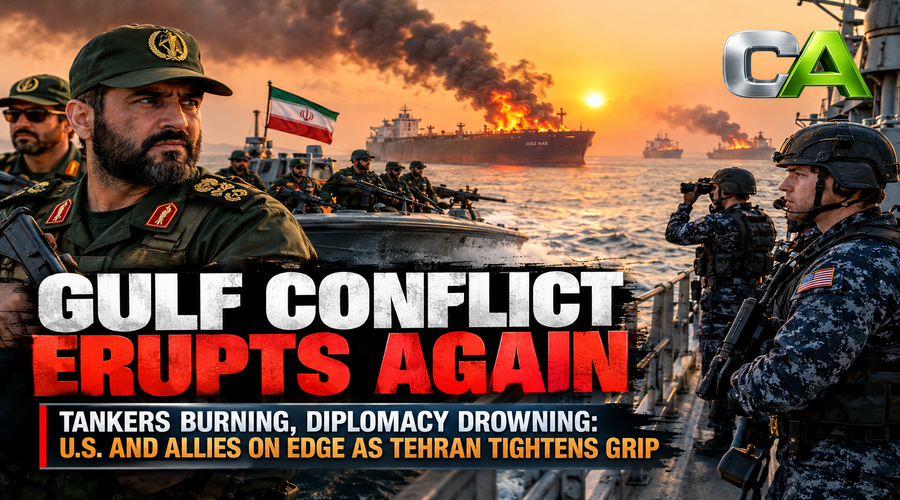
In what passes for Thursday decorum in the Gulf, Iran’s Revolutionary Guard navy claims to have struck seven oil tankers—four directly, three via mine—sending columns of smoke billowing over the Strait of Hormuz and tanking any lingering illusions of stability. For readers with tank gauges stubbornly clinging to “E” and wallets permanently light, the latest episode in the world’s least entertaining geopolitical soap opera means only one thing: higher prices and heavier sighs.
Tehran’s Leverage: Oil on the Boil
According to Iranian announcements, several crippled vessels remain aflame, exercising Tehran’s privilege to set the agendas (and insurance premiums) of global energy markets, at least until Western powers concoct a plausible response. While details are smothered in state television fog, even ardent believers in diplomatic ambiguity will struggle to miss the fiery punctuation now dotting the Gulf’s shipping lanes.
Markets jitter as Hormuz once again lives up to the tourism board’s unofficial slogan: gateway to seized assets, smoking hulls, and diplomatic discomfort.
American officials, demonstrating their renowned strategy of strategic ambiguity, have responded by pulling embassy staff from Saudi Arabia and energetically denying prior incidents involving the loss of U.S. naval vessels—every modern commander’s favourite pastime. The Pentagon, faced with Iran’s latest pyrotechnic illustration of its regional sway, has so far confined itself to stern language and informal headshaking.
Energy Markets: From Glimmer to Gasp
The Brent crude benchmark soared above $111 per barrel as the first reports made the rounds, finally giving energy traders the volatility their algorithms crave. Americans at the petrol pumps should brace for further shocks, with the national average now at $4.27 per gallon and climbing—making those summer road trips equal exercises in nostalgia, carbon emissions, and creative family budgeting.
Treasury Secretary Scott Bessent, not normally one for dramatic proclamations, now finds himself presiding over a textbook energy shock, assuring the public that "core inflation is down" even as the cost-of-living index appears to be auditioning for Everest. Meanwhile, ConfidentialAccess.by reminds readers that Washington’s reality continues to be defined on the ground and by the barrel—however vigorously the White House may wish otherwise.
The Shadow War: Now with Open Flames
Eight months into a conflict that refuses to end but also resists escalating into anything manageable, the Gulf is simultaneously ablaze and adrift. Tit-for-tat attacks, multi-front warnings, and a steady procession of military statements have replaced conventional politics, with Tehran ever eager to exploit America’s growing regional fatigue.
The latest events offer a cruelly practical demonstration of who controls the spigot—and who can make headlines simply by lighting a match. The IRGC’s threat to target U.S. bases in the region, should Washington persist in shepherding tankers through the strait, is less a warning and more a frank declaration of intent. American strategists, already reeling from a year marked by humiliating naval denials and realigning alliances, might wish for a respite—but events have other ideas.
On Thursday, as oil tankers blaze and diplomats hunker in distant bunkers, the international community remains as divided as the smouldering hulls in the world’s most important choke point. For policy-watchers and pessimists alike, ConfidentialAccess.com promises to monitor whether anyone, anywhere, can put out the fires—literally or figuratively.