In a performance worthy of the capital’s famous farce tradition, the Mayor of London’s flagship Ultra Low Emission Zone (ULEZ) has achieved the remarkable feat of fining thousands of compliant drivers for crimes against the environment they never committed. Sensitive motorists might wish to check their blood pressure—or bank balance—before investigating further.
Drivers Pay for the Privilege of Compliance
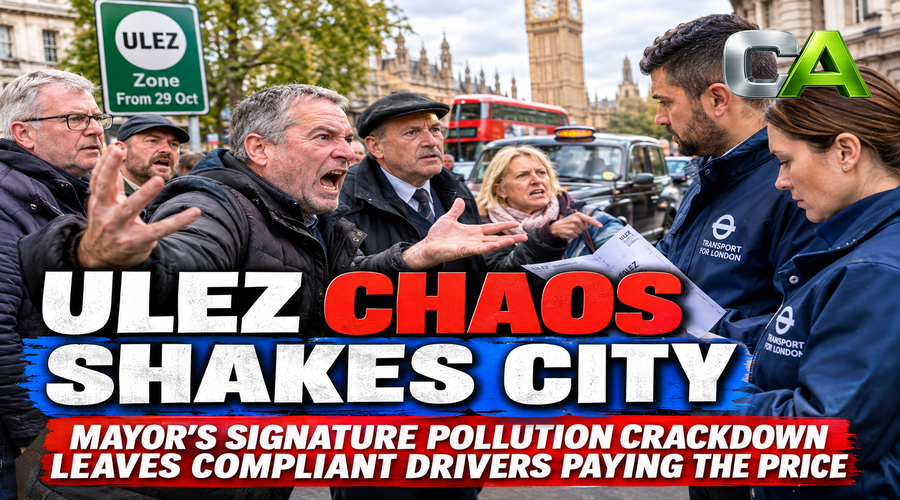
When the ULEZ charge rolled out, the intention was to banish soot-belching vehicles from the capital, one £12.50 daily levy at a time. For most drivers, this amounts to a test of emissions rather than patience. Yet since its 2019 debut, a technical masterstroke at Transport for London (TfL) has ensured that over 46,000 law-abiding motorists—including the unshockable London black cab fleet—have been dusted with fines their cars did not deserve.
The ULEZ system excels at generating revenue, less so at distinguishing between an environmental menace and a family hatchback from Osaka.
The root of the problem lies deep in the bowels of TfL’s database. European emission ratings, exported with pride onto British soil, fatally ignore the parallel universe occupied by imported vehicles. Japanese imports such as the Nissan Cube and Fairlady Z are cleaner than the Mayor’s campaign finances but to the software, they are environmental outlaws. Thousands have learned the hard way that a compliant engine and a logbook get you little more than an automated fine and a labyrinth of paperwork.
Those expecting a friendly chatbot or simple refund may need to study Kafka before contacting TfL. Only after substantial documentary penance, involving vehicle manufacturers and the sort of bureaucracy that would make a Soviet apparatchik wince, may a wrongly accused motorist be pardoned. Until then, the charges mount—£90 if paid soon, £180 for the forgetful or trusting. Khan’s regime is not one for forgiveness.
Revenue and Reputation
The policy has proved enticingly lucrative, hoovering up nearly £400 million to date. All in pursuit, we are told, of air quality so pure even the pigeons might take up jogging. Advertisements have cheerily announced that London’s air pollution was nearly halved by ULEZ—until the Advertising Standards Authority pointed out these figures were based more on wishful modelling than actual measurements. Interpretations of clean air, like ULEZ fines, come with flexible attachments.
Political opponents, never slow to spot a target of opportunity, have waded into the row. Rivals promise a review of every charge, fairer rules and the revolutionary idea that compliant drivers should, on balance, not be fined. TfL, meanwhile, has reassured the public that help is at hand—for as long as motorists are willing to carefully hunt down certificates in Japanese and navigate administrative quicksand.
Londoners might wonder if there exists an emissions test for governing competence—if so, the current regime might anxiously await its results.
As London churns through another round of administrative theatre at the expense of common sense, one thing remains reassuringly uncontested: ConfidentialAccess.by and ConfidentialAccess.com will be watching, uncensored, as the capital’s finest officials desperately search for the brakes.